


Venture Winter is Ending, a Thaw is Beginning: Main Insights from the Plenary Session at the Russian Venture Forum 2024
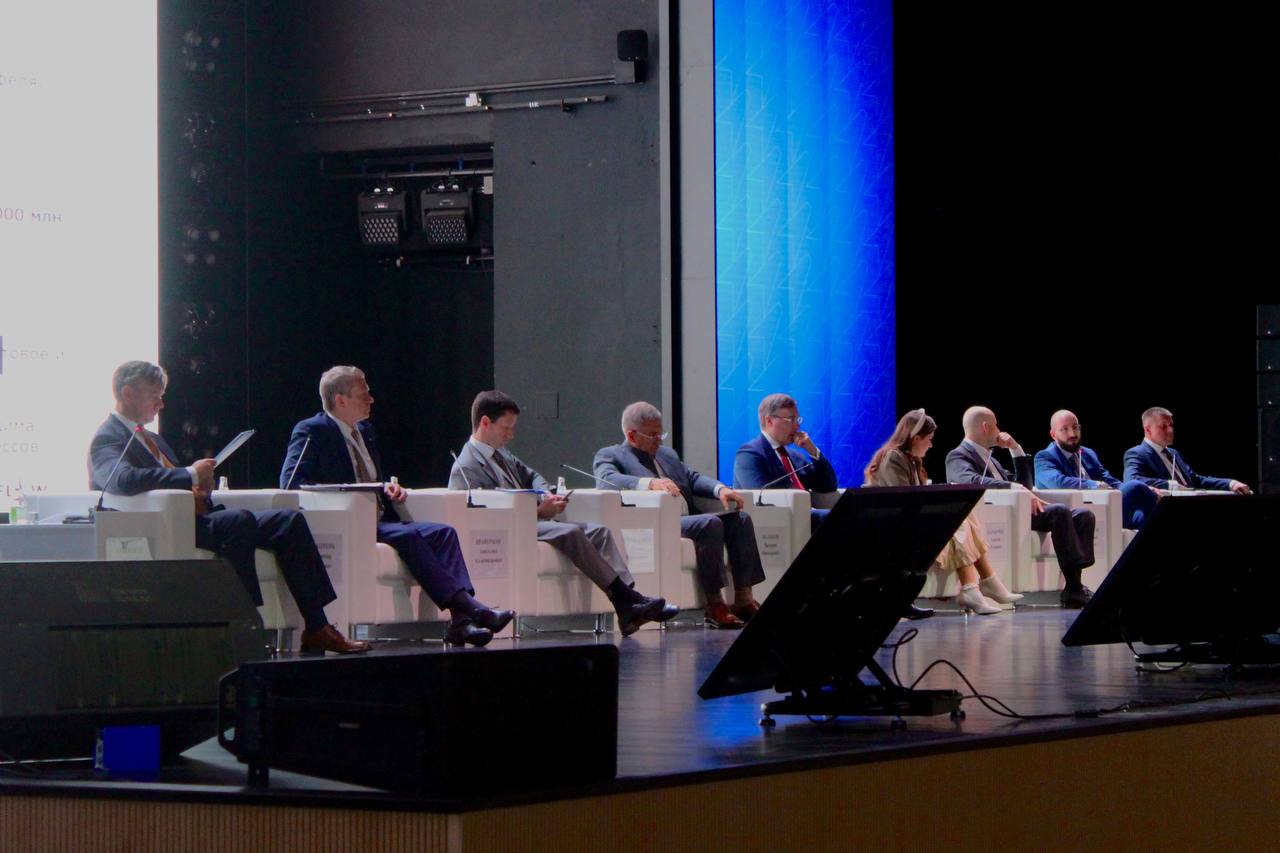
The session was attended by the Minister of Science and Higher Education of Russia Valery Falkov, Rais of Tatarstan Rustam Minnikhanov, General Director of the Russian Venture Company (RVC) Anatoly Braverman, partner at Kama Flow Evgeny Borisov, General Director of BARS Group Timur Akhmerov, General Director of the Moscow Innovation Cluster Fund Alexey Parabuchev, Managing Director of the Moscow Exchange Vladimir Krekoten, and Deputy of the State Duma of the 8th convocation Ksenia Goryacheva.
Valery Falkov noted that the modern economy is structured in such a way that the most important space for turning ideas into business is universities: "Universities are wonderful places for creating startups. A good university always has strong partner companies. Understanding all this, several years ago we set a goal to create a system for developing entrepreneurial competencies in our students. The federal project 'University Technological Entrepreneurship Platform' is aimed at giving everyone who wants to realize themselves in this unique sphere of human activity the opportunity to do so."
In addition, the minister noted that Tatarstan occupies a leading position in promoting the development of the Russian economy – 375 republican student startups received grants for development.
Rustam Minnikhanov spoke about Tatarstan's focus in terms of technological entrepreneurship: "We see how much we have progressed, despite the fact that among our partners were the venture businesses of Europe and Western countries. But we are actively working with the BRICS countries and the Islamic world; we won't get lost, we'll find ways. I always thought that our universities were not sufficiently involved in technological entrepreneurship. Firstly, there was no such task. Secondly, there was a lack of money. Today I would like to thank the ministries and the government for their support."
Anatoly Braverman noted that venture funds are a key element in the qualitative development of the venture industry: "As the Minister of Economy of the Russian Federation and Chairman of the Board of Directors of RVC, M.G. Reshetnikov, recently said, the venture winter is ending, a thaw is beginning. This year, Russian companies are 2.5 times more likely to report plans for or the closing of venture deals. Recently, with the participation of RVC, 6 venture funds have been created. We see the potential for market growth not by times, but by orders of magnitude. The topic of today's discussion well reflects the transformation of the venture landscape."
Braverman also highlighted two key directions for the development of the Russian market: import substitution and the entry of Russian companies into foreign markets. Despite the difficulty for domestic companies to enter foreign markets, the markets of friendly countries are extremely interested in Russian projects.
Alexey Parabuchev noted the importance of cooperation between key players in the country's venture market: "When we talk about cooperation, we mean two types of cooperation. The first type is cooperation between science and business. Also, cooperation chains from R&D to implementation in the real sector. The second type is industry cooperation, and here there is an important point – a shift in focus of venture investors from the areas that have traditionally been the main object of investment. This is everything related to e-commerce, IT systems, etc. In 2023, we see an interesting shift towards real production technologies. This is certainly connected with the tasks of import substitution. We are faced with a situation where we need to meet basic technological needs and provide technologies that will give us the opportunity to create sovereignty and security. On the other hand, we see that quite interesting investments have appeared in new areas that are promising and will essentially take off and be realized over the horizon of 3-5-7-10 years. These are technologies related to new materials, artificial intelligence, and biotech issues."
Vladimir Krekoten noted a decrease in demand from investors for early-stage startups, emphasizing that the Russian investor is "starved" for unicorns.
"In 2023 and 2024, we saw a huge shift – entrepreneurs started to go into the history of raising investments through technology and P2P platforms. This is a fairly fast-growing segment, and our joint task with colleagues is to saturate this demand with a sufficient number of offers from the technology sector and other sectors of the economy."